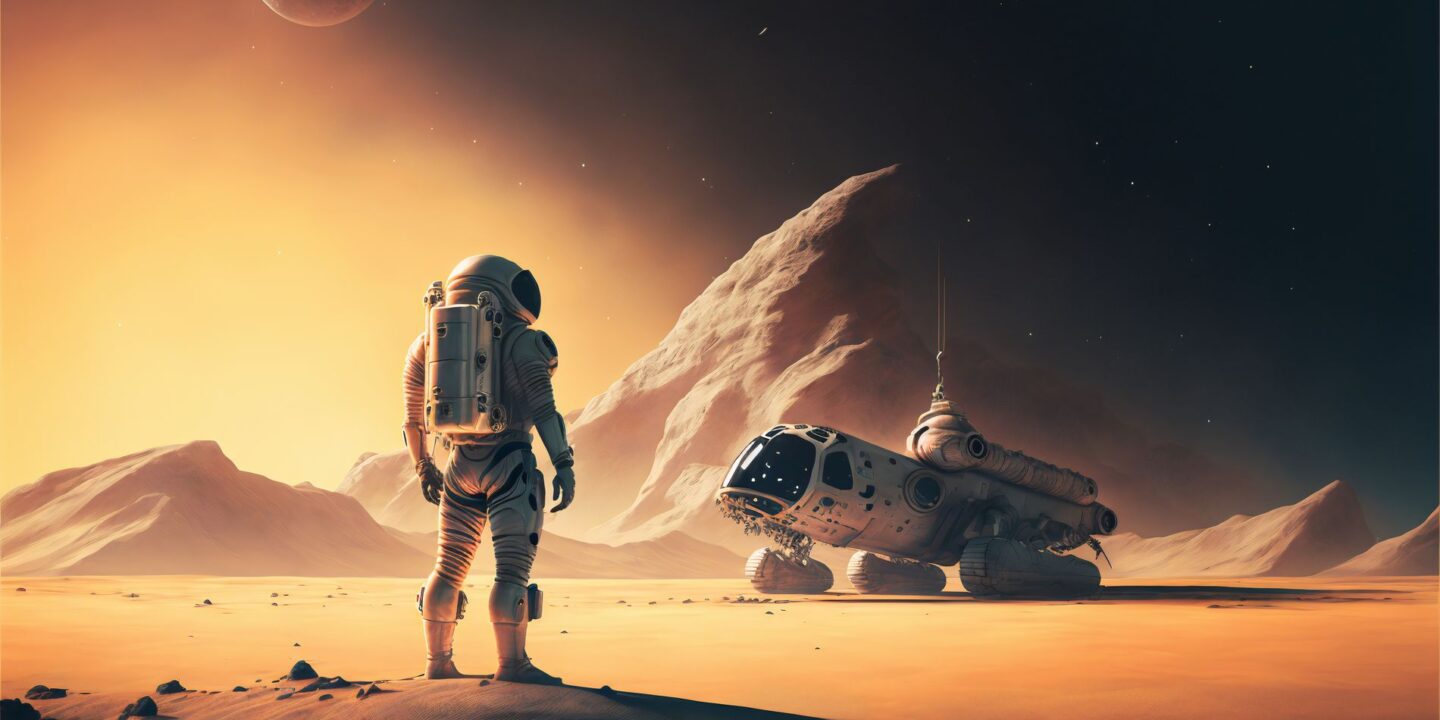

The exploration of space has always captivated the human imagination. It represents the ultimate frontier, a realm of endless possibilities and discoveries. As technology advances and scientific knowledge deepens, the future of space exploration holds immense promise and potential. In this blog post, we will delve into the exciting world of human space exploration, discussing the significance of venturing beyond Earth, the future of space colonization, and the next step: interplanetary travel.
Space Agencies and Companies
Human space exploration is a collaborative effort involving various space agencies and companies from around the world. These organizations play a crucial role in advancing our understanding of the cosmos and developing the necessary technologies for human space travel.
NASA’s Human Spaceflight Missions and Programs
NASA, the National Aeronautics and Space Administration, has been at the forefront of human space exploration for decades. From the historic Apollo missions to the International Space Station (ISS), NASA has pushed the boundaries of what is possible in space. Currently, NASA is focused on the Artemis program, which aims to return humans to the Moon and establish a sustainable presence there by 2024. This ambitious program will serve as a stepping stone for future missions to Mars and beyond.
SpaceX’s Ambitious Mars Mission
SpaceX, founded by entrepreneur Elon Musk, has set its sights on Mars colonization. Musk envisions a future where humans become a multiplanetary species, with Mars serving as a second home. SpaceX’s Starship, a fully reusable spacecraft, is being developed to transport humans and cargo to Mars. With its innovative approach and ambitious goals, SpaceX is revolutionizing the field of space exploration.
Blue Origin’s Contributions to Space Exploration
Blue Origin, led by Amazon founder Jeff Bezos, is another key player in the field of space exploration. The company is focused on developing reusable rocket technology to make space travel more affordable and accessible. Blue Origin’s New Shepard spacecraft has successfully completed multiple suborbital flights, paving the way for future human space missions.
ESA’s Human Missions and Collaborations
The European Space Agency (ESA) is actively involved in human space exploration. ESA has contributed to the development of the International Space Station and has plans for future missions to the Moon and Mars. The agency also collaborates with other space organizations, fostering international cooperation in the pursuit of scientific knowledge and technological advancements.
Roscosmos’ Manned Missions and Advancements
Roscosmos, the Russian space agency, has a long history of manned space missions. From Yuri Gagarin’s historic journey as the first human in space to the current missions to the International Space Station, Roscosmos has been a key player in human space exploration. The agency continues to develop advanced spacecraft and technologies for future missions.
Technologies and Concepts
The success of human space exploration relies on the development of advanced technologies and innovative concepts. These advancements enable astronauts to survive and thrive in the harsh environment of space.
Spacecraft Design for Human Exploration
Designing spacecraft for human exploration is a complex task. These vehicles must provide a safe and habitable environment for astronauts during long-duration missions. Factors such as radiation protection, life support systems, and mobility are crucial considerations in spacecraft design.
Life Support Systems in Space Habitats
Life support systems are essential for sustaining human life in space habitats. These systems provide astronauts with breathable air, clean water, and proper waste management. They also regulate temperature, humidity, and pressure to create a comfortable living environment.
Space Suits and Their Impact on Human Mobility
Space suits are critical for astronauts to venture outside their spacecraft and explore the extraterrestrial environment. These suits protect astronauts from the vacuum of space, extreme temperatures, and micrometeoroids. However, space suits also pose challenges in terms of mobility and dexterity, as they are bulky and restrict movement.
Deep Space Communication Challenges and Solutions
Communication is vital for human space exploration, especially during deep space missions. However, the vast distances and signal delays pose significant challenges. Advanced communication systems, such as deep space networks and laser communication, are being developed to overcome these obstacles and ensure reliable communication with astronauts.
In-situ Resource Utilization (ISRU) for Sustainable Space Exploration
In-situ resource utilization (ISRU) involves utilizing resources found on celestial bodies, such as the Moon and Mars, to sustain human missions. This concept aims to reduce the reliance on Earth for essential resources by extracting and utilizing local materials. ISRU has the potential to revolutionize space exploration, enabling self-sustaining colonies and reducing the need to transport resources from Earth.
Missions and Programs
Several missions and programs are shaping the future of human space exploration. These initiatives aim to expand our presence in space and pave the way for future interplanetary travel.
Artemis Program: Returning to the Moon
The Artemis program, led by NASA, is focused on returning humans to the Moon by 2024. This ambitious program aims to establish a sustainable presence on the lunar surface, conducting scientific research and preparing for future missions to Mars. The Artemis program will utilize the Space Launch System (SLS) and the Orion spacecraft to transport astronauts to the Moon.
Mars One Project: Colonizing Mars
The Mars One project gained significant attention for its ambitious goal of establishing a permanent human settlement on Mars. The project aimed to send a crew of astronauts on a one-way trip to the Red Planet, with the intention of building a self-sustaining colony. While the project faced financial and technical challenges and is no longer active, it sparked a global conversation about the future of Mars colonization.
Lunar Gateway: A Stepping Stone for Deep Space Exploration
The Lunar Gateway is a planned space station in lunar orbit that will serve as a staging point for future deep space missions. It will provide a platform for scientific research, technology development, and international collaboration. The Lunar Gateway will enable astronauts to live and work in lunar orbit, conducting experiments and preparing for missions to Mars and beyond.
The Future of the International Space Station (ISS)
The International Space Station (ISS) has been a symbol of international cooperation in space exploration. As the ISS approaches its planned retirement in the 2030s, discussions are underway regarding its future. Possibilities include commercialization, international partnerships, or even the development of a new space station. The future of the ISS will shape the trajectory of human space exploration in the coming years.
SpaceX Starship Missions and Their Objectives
SpaceX’s Starship, a fully reusable spacecraft, is being developed for a variety of missions, including crewed missions to the Moon, Mars, and beyond. The Starship’s primary objective is to enable the colonization of Mars, with the ultimate goal of making humans a multiplanetary species. The spacecraft’s capabilities and versatility make it a key player in the future of human space exploration.
Challenges and Solutions
Human space exploration is not without its challenges. Astronauts face numerous physical and psychological hurdles during long-duration missions. However, innovative solutions are being developed to overcome these challenges and ensure the safety and well-being of astronauts.
Radiation Protection in Space
One of the most significant challenges of human space exploration is radiation exposure. Beyond the protective shield of Earth’s atmosphere, astronauts are exposed to high levels of radiation from cosmic rays and solar flares. Developing effective radiation shielding and mitigation strategies is crucial to protect astronauts during long-duration missions.
Microgravity Health Effects and Countermeasures
Extended periods of exposure to microgravity can have detrimental effects on the human body. Astronauts experience muscle and bone loss, cardiovascular changes, and weakened immune systems. Countermeasures such as exercise, medication, and specialized equipment are employed to mitigate these effects and maintain astronaut health during space missions.
Psychological Challenges of Long-Duration Spaceflight
The isolation and confinement of space travel can have profound psychological effects on astronauts. The lack of contact with loved ones, the monotony of daily routines, and the inherent risks of space travel can lead to feelings of loneliness, anxiety, and depression. Psychologists and mission planners work together to develop strategies to support the mental well-being of astronauts during long-duration missions.
Sustainable Life Support Systems for Extended Missions
Extended missions to destinations like Mars require sustainable life support systems. These systems must be capable of recycling waste, generating food and water, and providing a closed-loop environment for astronauts. Developing self-sufficient and efficient life support systems is crucial for long-duration space exploration.
Closed-Loop Life Support Systems for Self-Sufficiency
Closed-loop life support systems aim to create a self-sufficient environment for astronauts, minimizing the need for resupply from Earth. These systems utilize regenerative technologies to recycle waste, produce food, and generate resources. Closed-loop systems are essential for long-duration missions and the establishment of self-sustaining colonies on other celestial bodies.
Future Prospects and Theoretical Concepts
The future of human space exploration holds exciting prospects and theoretical concepts that could revolutionize our understanding of the universe and our place in it.
Terraforming Mars: Transforming the Red Planet into a Habitable World
Terraforming Mars involves transforming the Martian environment to make it suitable for human habitation. This ambitious concept includes altering the planet’s atmosphere, temperature, and surface conditions to create a habitable world. While terraforming Mars is a theoretical concept that presents numerous challenges, it represents a potential future for human colonization.
Dyson Spheres and Megastructures: Harnessing the Energy of Stars
Dyson spheres and megastructures are theoretical concepts that involve harnessing the energy of stars for human use. A Dyson sphere is a hypothetical structure that surrounds a star, capturing its energy and providing virtually unlimited power. While these concepts are currently beyond our technological capabilities, they represent intriguing possibilities for future space exploration.
Warp Drive and Faster-Than-Light Travel: Theoretical Concepts for Interstellar Exploration
Warp drive and faster-than-light travel are theoretical concepts that could revolutionize interstellar exploration. These concepts involve manipulating spacetime to achieve faster-than-light speeds, allowing humans to travel vast distances in a relatively short amount of time. While these concepts are purely speculative at present, they fuel the imagination and inspire future generations of scientists and engineers.
Artificial Gravity in Space Habitats: Creating a Sense of Gravity for Long-Term Habitation
Artificial gravity is a concept that aims to create a sense of gravity in space habitats. Long-term exposure to microgravity can have detrimental effects on the human body, and artificial gravity could mitigate these effects. Various methods, such as rotating habitats or centrifugal force, are being explored to simulate gravity and ensure the health and well-being of astronauts during extended missions.
Implications of Asteroid Mining for Space Exploration and Resource Utilization
Asteroid mining involves extracting valuable resources from asteroids, such as metals, water, and rare minerals. This concept has significant implications for space exploration and resource utilization. Asteroid mining could provide essential resources for future missions, reduce the need for resupply from Earth, and even serve as a stepping stone for further space exploration.
Policy and International Cooperation
The future of human space exploration relies on effective policies and international cooperation. These aspects shape the governance, ethics, and funding of space exploration initiatives.
Space Law and Governance: Regulations for Space Activities
Space law and governance encompass the legal framework that governs space activities. International treaties, agreements, and regulations ensure the peaceful and responsible exploration and use of outer space. Space law addresses issues such as space debris mitigation, intellectual property rights, and liability for damages caused by space activities.
International Collaboration in Space Exploration: The Importance of Cooperation
International collaboration is crucial for the success of human space exploration. Space agencies and countries work together to share resources, knowledge, and expertise. Collaborative efforts enable the pooling of resources and the development of more ambitious missions. International cooperation fosters a spirit of unity and shared goals in the pursuit of scientific discovery and technological advancements.
Space Exploration Ethics: Considerations for Responsible Exploration
Space exploration raises ethical considerations that must be addressed. These include the preservation of celestial bodies, the impact on indigenous life forms (if any), and the responsible use of resources. Ethical frameworks and guidelines ensure that space exploration is conducted in a manner that respects the environment and minimizes harm.
Funding for Space Exploration: The Financial Aspect of Pushing the Boundaries
Space exploration is a costly endeavor that requires significant financial resources. Governments, private companies, and international collaborations contribute to the funding of space exploration initiatives. The allocation of funds for space exploration is a complex process that involves balancing scientific priorities, technological advancements, and public support.
Space Race 2.0: The New Era of Competition in Space Exploration
The 21st century has witnessed the emergence of a new space race, often referred to as Space Race 2.0. Countries such as the United States, China, Russia, and private companies like SpaceX and Blue Origin are competing to achieve significant milestones in space exploration. This competition drives innovation, pushes boundaries, and accelerates the pace of human space exploration.
The future of human space exploration is filled with excitement, challenges, and endless possibilities. Venturing beyond Earth, colonizing other planets, and exploring the depths of the cosmos are endeavors that captivate the human spirit. As we embrace the challenges and opportunities that lie beyond our home planet, we pave the way for a future where humanity becomes an interplanetary species. The next frontier in human space exploration holds the potential to transform our understanding of the universe and our place within it.